Supporting Our Community and Talking to Our Children About Current Events
By Anna Goodkind, Director of Early Education
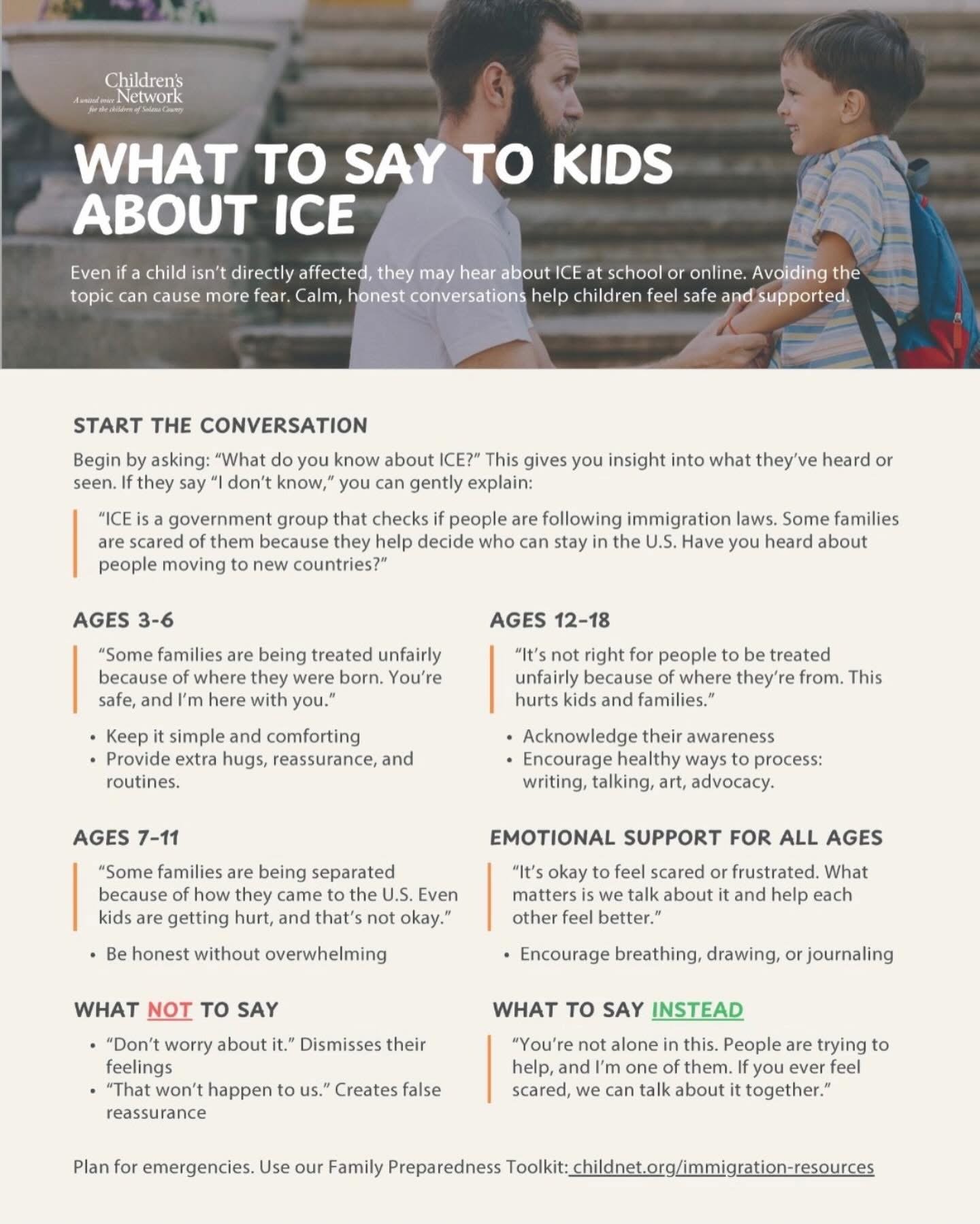
Recently my husband and I had to talk to our six-year-old about ICE. He found our copy of New York magazine with a photo by Stephanie Keith on the cover of immigrant families clinging to one another in tears, and asked a lot of questions. After hearing that government agents were targeting people, often unjustly and violently, who they thought didn't belong in the country, he asked a thoughtful and moving question: "how do they know who doesn't belong in the country?" This led to a discussion of racism, a word he already knew, but perhaps hadn't yet thought about in action. As hard as this conversation, and the subsequent ones that followed it, might have been to have with our six-year-old, my husband and I strongly believe that what would have been far worse than an uncomfortable conversation would have been to allow him to see that scary magazine cover and either not feel comfortable asking questions about it, or ask questions and be met with silence, avoidance, or reprimands.
When things are scary in the news, in our country, or even in our own neighborhoods, it can feel so hard to talk to our children about these topics. Regardless, our main work as parents, caregivers, and educators is to be a safe place for our children to go; it is not to have all of the answers. For our youngest students, who can sense stress and anxiety in their environment even if they aren't putting these feelings into words, we can literally just be that, a safe physical space where they can find comfort. As our children age, we can be more present to hear their wonderings and feelings, and answer their questions truthfully to the best of our ability while also offering reassurance that we will keep them safe. We should also remind them what it means to be a kind, empathetic, caring human in this world, and that there are many other kind and caring folks in our society working to do good things.
It can be hard to know what to do in these moments, but we can remind ourself that like our TCEE motto says--"nurturing our children, building our future"—we are actually doing the most important work we can in building the next generation of thoughtful, empathetic, resilient citizens of the world and that is a truly valuable gift to society. At TCEE, we see each child, family, and teacher as b'tzelem elohim –unique, of infinite value, and equal to all other souls in our sacred work of teaching and learning. And we let this mission guide us as we speak with children about real life current events. We believe that every single person in our world has inherent dignity and value; when humans are robbed of that humanity, which is happening in our country right now, that is simply not okay. The best thing we can do is form connections for our children, even if we can't fully process these events for ourselves right now. Different folks in our community will have different emotions and experiences of taking in what is happening in our country, based on their backgrounds, but the one thing we can all agree on is that everyone deserves to be treated with respect and dignity. And we can make sure our children know this message—treat every human being with dignity, value, respect, and humanity.
Fred Rogers, the beloved television icon, once said: "No matter what our particular job, especially in our world today, we all are called to be Tikkun Olam —repairers of creation. Thank you for whatever you do, wherever you are, to bring joy, and light, and hope, and faith, and pardon and love to your neighborhood and to yourself." With the goal of raising our youngest citizens with values of humanity, decency, and respect for all human life we will focus on building relationships, modeling kindness and caring for all, and being physically and emotionally present. Especially for our youngest learners, our calm presence, predictability of routine, and kind connections matter more than explanations we may or may not have, especially when we adults are unsure of the state of the world ourselves. And this is one way in which we will demonstrate tikkun olam as a community. The people in Minnesota working together right now to care for and support one another offer a poignant example of what it means to be a community; in the Jewish world we call this kehillah kedoshah – a holy community – the idea that when we stand together, we have more power than when we are alone. Though we don't want to overburden our children with talk of violence, we can reiterate for them the importance of community connection and standing up together for one another's humanity.
It's important to not shy away from conversation about these topics; when our children come to us because they are hearing things or seeing images that make them feel scared, or have questions, if we shush them or make it seem like these topics are taboo, that is how they loom and grow in children's minds to become increasingly scary. They need to know that we are here for them, we are open to talking, even if we don't have all the answers ourselves—"I don't know" is always a fine response to a young child's question, but "we can't talk about that" generates more fear. We can ask children how they feel when people talk about others in ways that are unkind or unfair, and what it means to them to say that every person, no matter their background, is important and special and deserves to be treated kindly and respectfully. And generate conversation this way. Then reassure them that we love and care for them and will keep them safe.