

What is Jewish about Thanksgiving?
by Priscilla Restagno, Judaics & Curriculum Coordinator
Jewish time is marked by cycles of the moon, and, amusingly, apples! According to Maxine Segal Handelman and Deborah L. Schein in “What’s Jewish about Butterflies?”, apples are a critical part of the Jewish year. “Jewish people eat apples dipped in honey for Rosh Hashanah to signify a sweet, good year. During winter, apples can be made into applesauce, which is traditionally eaten with Chanukah latkes. Apples join with nuts and wine on Pesach to make charoset. Because the apple is linked to so many Jewish celebrations, it helps mark Jewish time.”
Every Thanksgiving, we would have a variety of pies at our family table, including pumpkin, blueberry, and apple. It seems that the apple makes an appearance again, but does that make Thanksgiving a Jewish holiday?

Thanksgiving is actually a rather Jewish event, despite its secular roots, when you consider Jewish values. Thanksgiving follows Sukkot, another harvest festival where we invite guests to sit under the stars as we look through the sukkah and have meals together. Sukkot is also known as zman simchatenu, “the season of our joy.” But couldn’t we say that for Thanksgiving as well? Thanksgiving is characterized by gratitude, hospitality, and community. Looking through the lenses of friendship and family, we can see the Jewish values of B’Tselem Elohim (divine image), chesed (kindness), holiness (kedusha), community (kehillah), and respect (kavod).
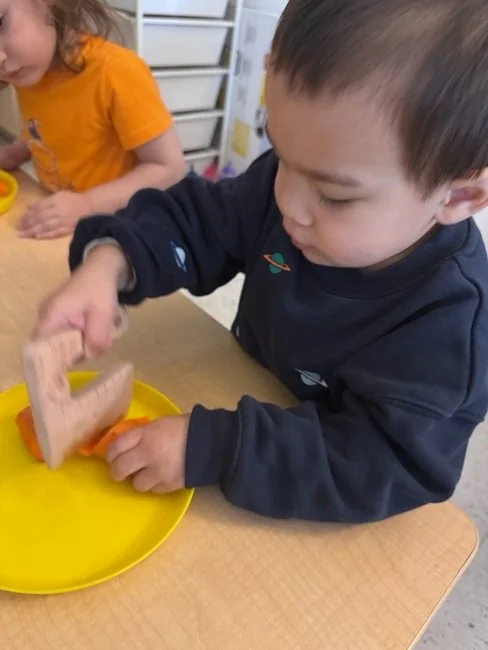
Traditional Thanksgiving lessons are often full of stereotypes and problematic retellings, while ignoring the reality of what many Indigenous people actually experienced, but at TCEE, we don't do handprint turkeys, "Indian" headdresses, or other "traditional" Thanksgiving activities. Rather, we explore the foods of the earth like pumpkins, gourds, and squash. We open up pumpkins, laugh at how slimy it can feel on our fingers, and wonder how we turn this giant, orange object into something like pumpkin bread. We read stories about what we are thankful for, and we read about how amazing the world is around us. We consider how different families may celebrate Thanksgiving, what foods they may have at their tables. Just like Shabbat, and just like during Sukkot, we spend time with the important people in our lives and reflect on the world and what we are grateful for. It is this sense of gratitude that highlights how Jewish this secular holiday can be. Even in our prayers do we hear our amazement at the world around us. For example, in one of my favorite prayers (the shehecheyanu), we say:
Baruch atah, Adonai Eloheinu, Melech haolam, shehecheyanu, v'kiy'manu, v'higiyanu laz'man hazeh.
Blessed are You, Adonai our God, Sovereign of all, who has kept us alive, sustained us, and brought us to this season.
What joy it is to be brought to this moment! So this Thanksgiving, I encourage you to immerse yourself in a season of joy and to revel in the moments of gratitude. Rabbi Eric Eisenkramer from reformjudaism.org says, “On this Thanksgiving, when we are gathered around the table, I might suggest that we offer a special blessing: ‘Baruch atah Adonai, Blessed are you God, who has given us the bounty of food and the blessing of family.’”